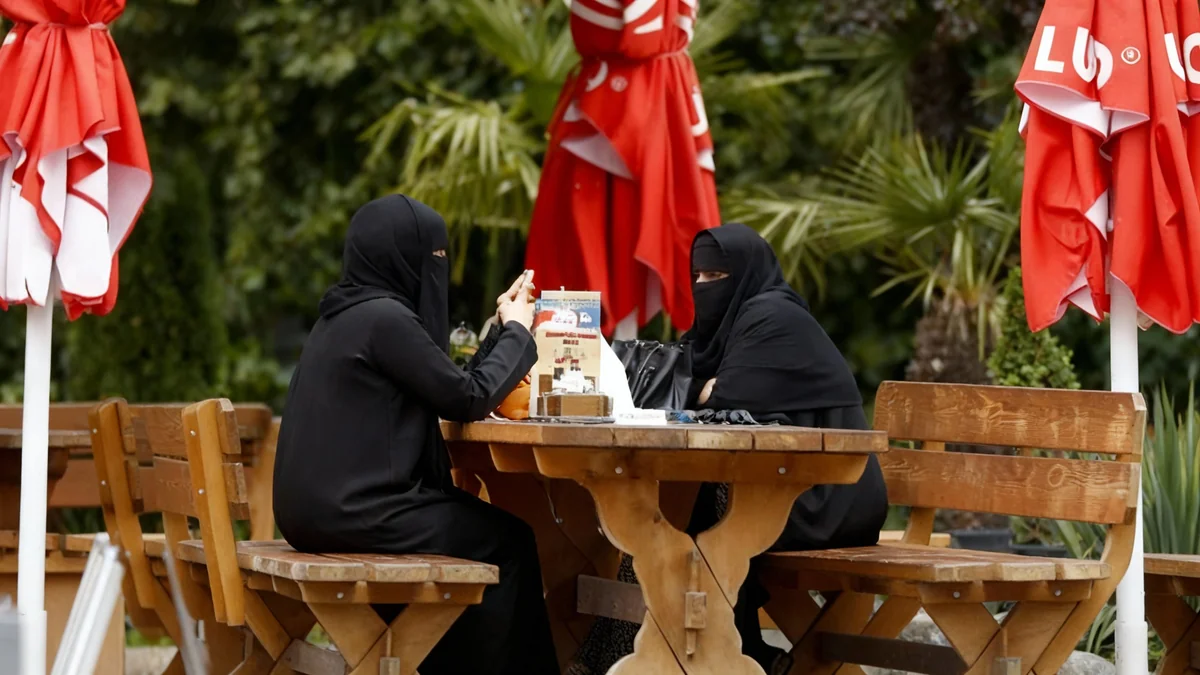




A year after Switzerland implemented a nationwide ban on face coverings in public, authorities in the Bernese tourist regions have begun issuing fines. The prohibition, which includes niqabs and burkas, has seen several individuals penalized for non-compliance, particularly in popular alpine destinations.
Key Takeaways
- Switzerland's face covering ban has been in effect for one year.
- Fines are now being issued, especially in Bernese tourist areas.
- The ban applies to all face coverings, including niqabs and burkas.
- Local authorities confirm instances of non-compliance and penalties.
The Enforcement of Public Face Coverings
The federal law, which came into force last year, forbids individuals from covering their face in public spaces. This includes streets, public transport, and various facilities. The objective of the law is to ensure clear communication and identification in public interactions.
Local police forces and municipal authorities are responsible for enforcing this regulation. They have the power to approach individuals who violate the ban and issue fines. The severity of the penalty can vary based on the specific circumstances.
Fact: Nationwide Ban
The ban on face coverings was approved by Swiss voters in a national referendum. This made Switzerland one of several European countries to implement such a prohibition.
Impact in Tourist Destinations
Bern's picturesque alpine resorts, known for attracting visitors from around the globe, have seen particular attention regarding the enforcement of this ban. The influx of international tourists means a diverse range of cultural practices are present, leading to potential clashes with local regulations.
Reports indicate that some visitors, unaware of or choosing to disregard the new law, have faced penalties. These incidents highlight the challenges of implementing a uniform law across a region that thrives on international tourism.
"Our goal is to ensure public order and safety for everyone. The law applies equally to residents and tourists alike," stated a local police spokesperson.
Specific Incidents and Penalties
While specific numbers are not yet widely released, authorities confirm multiple instances where fines have been imposed. These cases generally involve individuals wearing full face veils such as niqabs or burkas. The fines serve as a deterrent and a means of enforcing the federal mandate.
The process usually involves an initial warning, followed by a fine if the individual refuses to comply. The amount of the fine can range from a few hundred Swiss francs, depending on the canton and the discretion of the enforcing officer.
Background on the Ban
The initiative for the face covering ban, often referred to as the 'burka ban,' was narrowly approved in a national vote. Proponents argued it promoted integration and security, while opponents cited religious freedom concerns.
Public Reaction and Future Outlook
The implementation of the ban has generated mixed reactions from the public and various advocacy groups. Supporters emphasize the importance of national identity and public safety, while critics argue it infringes on personal liberties and religious expression.
In tourist areas, some business owners express concern that the ban could potentially deter certain segments of international visitors. However, others believe it clarifies expectations for all who visit or reside in Switzerland.
- Economic Concerns: Some fear a potential negative impact on tourism revenue, especially from regions where face coverings are common.
- Social Integration: Proponents argue the ban aids in social integration by promoting open communication.
- Legal Challenges: The law has faced legal challenges, but it remains in effect nationwide.
As the law enters its second year, authorities continue their efforts to inform both residents and visitors about the regulations. Information campaigns are crucial, particularly in areas frequented by international travelers, to ensure broad awareness and compliance.
The long-term effects on tourism and social dynamics in Switzerland remain a topic of ongoing observation and discussion. The balance between maintaining cultural openness and enforcing national laws is a continuous challenge for the country.