

A prominent banner celebrating 150 years of Swiss-Iranian relations has been displayed at the Iranian embassy in Bern, highlighting the ongoing activities of the Switzerland-Iran Chamber of Commerce. The organization, led by a former high-ranking Swiss diplomat, continues to pursue economic engagement with Tehran, a move that stands in contrast to the current international political climate.
The display and the chamber's activities, which include planned business trips to Iran, underscore Switzerland's unique and often complex diplomatic and economic posture toward the Islamic Republic.
Key Takeaways
- The Switzerland-Iran Chamber of Commerce is actively promoting business ties with Iran.
- A banner celebrating "150 years of friendship" was recently placed at the Iranian embassy in Bern.
- The chamber is led by a former Swiss diplomat who frequently visits the embassy.
- The organization's vice-president is planning a business delegation trip to Iran.
- These activities occur amid heightened international tensions and sanctions against the Iranian government.
A Visible Sign of Friendship in Bern
On a recent Friday afternoon, a large banner appeared on the fence of the Iranian embassy in Bern. Positioned beneath a line of barbed wire, the sign features the Swiss cross and the flag of the Islamic Republic of Iran, with a message in the center: "150 Years of Friendship Treaty Switzerland - Iran."
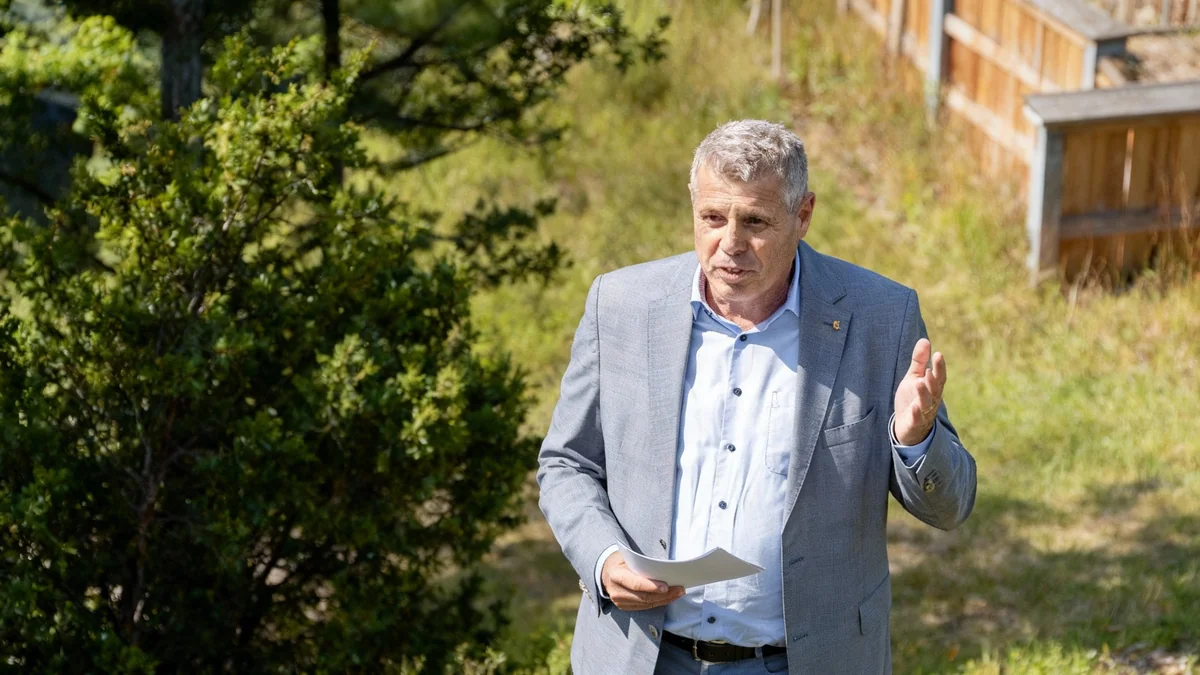
This public display was organized by members of the Switzerland-Iran Chamber of Commerce. Among them was Vital Burger, the chamber's vice-president, who helped affix the banner to the embassy's perimeter fence. The gesture is a clear statement of the organization's intent to maintain and celebrate the long-standing relationship between the two nations, focusing on historical ties that date back to a treaty signed in the 19th century.
"We want to build bridges," said Vital Burger, explaining the motivation behind the banner.
This statement reflects the core mission of the chamber: to facilitate economic and commercial connections, even when political winds blow in a different direction. The banner serves as a physical symbol of this ongoing effort to keep channels of communication and commerce open.
Switzerland's Neutral Stance
Switzerland's foreign policy is built on the principle of neutrality. This has historically allowed it to act as a mediator in international conflicts and maintain diplomatic relations with countries that are isolated from much of the Western world. Since 1980, Switzerland has served as the protecting power for the United States in Iran, handling consular services and facilitating communication after Washington severed diplomatic ties with Tehran.
Leadership with Deep Diplomatic Roots
The leadership of the Switzerland-Iran Chamber of Commerce includes figures with significant experience in Swiss diplomacy. The organization's president is a former top Swiss diplomat, whose career provides him with a deep understanding of international relations and the intricacies of engaging with foreign governments.
His role involves regular contact with Iranian officials, and he is a frequent guest at the Iranian embassy in Bern. This level of access and communication is central to the chamber's ability to navigate the complex landscape of Swiss-Iranian economic relations. The involvement of a former high-level official lends a degree of credibility and expertise to the chamber's operations.
Fostering Business Through Direct Engagement
The chamber's work goes beyond symbolic gestures. It is actively planning future engagement, with Vice-President Vital Burger preparing to lead a group of business representatives on an upcoming trip to Iran. Such delegations are designed to explore commercial opportunities and strengthen personal contacts between the Swiss business community and their Iranian counterparts.
These efforts persist despite a challenging international environment. Global sanctions, primarily led by the United States, have severely restricted financial transactions and trade with Iran, making business difficult for many international companies. The chamber's activities suggest a belief in the potential for future economic normalization and a desire to maintain a foothold in the Iranian market.
A Long History of Relations
The "Friendship Treaty" referenced on the banner was signed in 1873. Official diplomatic relations were established in 1919. This long history forms the basis for Switzerland's argument for continued dialogue and engagement, separating historical ties from current political disputes.
The Economic and Political Tightrope
Operating a chamber of commerce focused on Iran requires a delicate balance. On one hand, the organization aims to promote the interests of its members, who see potential in a market of over 80 million people. On the other, it must operate within the legal and ethical boundaries set by Swiss and international law, including complex sanctions regimes.
The Swiss government itself walks a similar tightrope. While it implements UN sanctions and aligns with many international concerns regarding Iran's nuclear program and human rights record, it also maintains its policy of critical dialogue. This policy holds that engagement, rather than complete isolation, is more likely to yield positive change over the long term.
The activities of the Switzerland-Iran Chamber of Commerce can be seen as a non-governmental extension of this philosophy. By focusing on the economic sphere, proponents argue they are building people-to-people connections and supporting a private sector that could one day be a force for change. They see themselves as keeping a door open that might otherwise be firmly shut.
Contrasting Views on Engagement
The chamber's approach is not without its critics. Human rights organizations and political opponents of the Iranian government argue that any form of business engagement provides legitimacy and financial resources to a regime accused of widespread repression. They contend that economic ties can be seen as an endorsement, undermining international pressure for political and social reform.
These critics point to ongoing issues within Iran, including the suppression of protests, restrictions on free speech, and the treatment of women and minorities. From this perspective, banners celebrating "friendship" and business trips appear tone-deaf to the reality faced by many Iranian citizens.
However, supporters of the chamber's work argue that economic isolation primarily harms the general population, not the ruling elite. They believe that maintaining business ties, particularly in non-sanctioned sectors like food and medicine, is a humanitarian necessity and a way to preserve goodwill for a post-sanctions future. The chamber's leadership appears firmly in this camp, believing that their bridge-building efforts serve Switzerland's long-term economic and diplomatic interests.
As the banner at the Bern embassy illustrates, the debate over how best to engage with Iran continues, with the Switzerland-Iran Chamber of Commerce taking a clear and public stance on the side of continued dialogue and commerce.