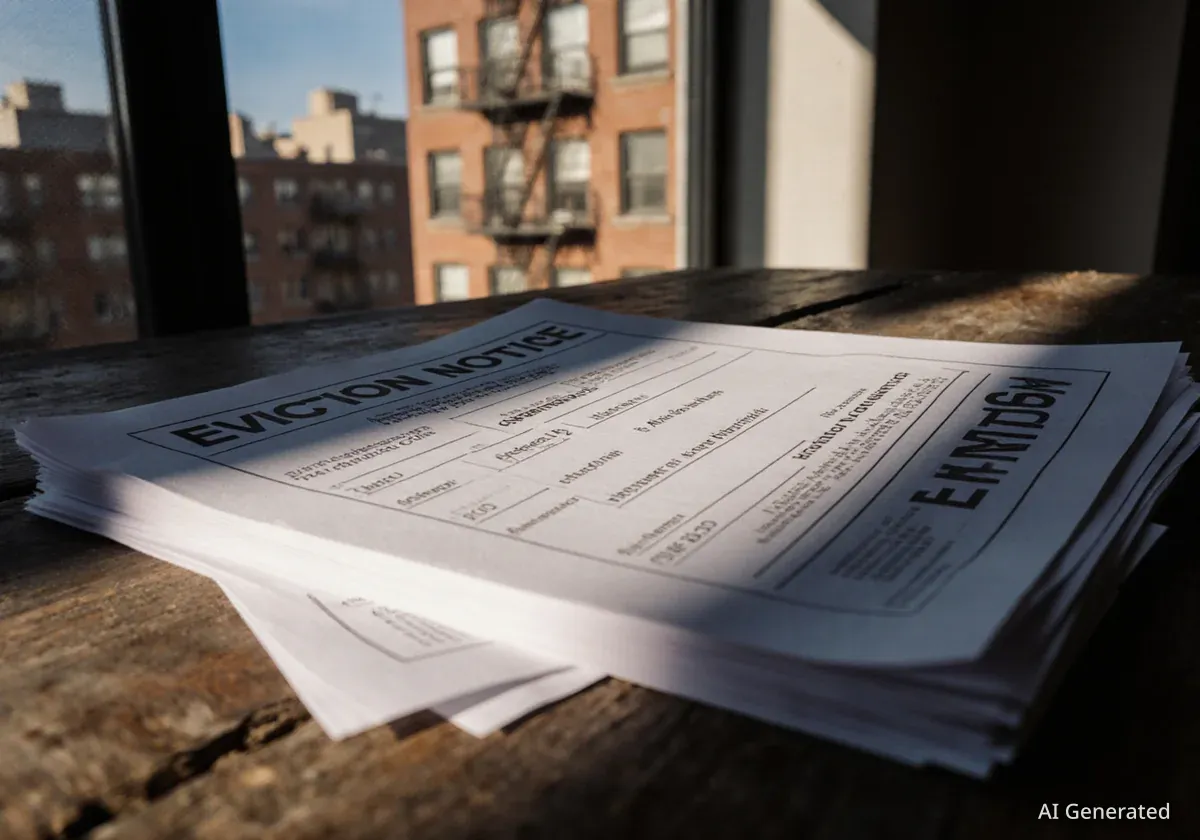


Eighteen tenant parties in Bern are facing eviction notices by the end of July. The Pension Fund of the Burgergemeinde Bern, their landlord, issued these notices. This move is not for renovation, but to implement significant rent increases, ranging from 41 to 64 percent. Affected residents have challenged these evictions, but without success.
This situation highlights a growing trend of 'empty evictions' across Switzerland. Landlords are terminating existing leases to re-rent properties at much higher prices. This practice raises concerns about housing affordability and stability in urban centers.
Key Takeaways
- 18 tenant parties in Bern received eviction notices for July.
- Rents are set to increase by 41 to 64 percent after current tenants leave.
- All legal challenges by the tenants have been unsuccessful.
- 'Empty evictions' are a rising issue in Swiss cities.
- Similar cases have emerged in Zurich and Geneva, affecting hundreds.
The Bern Case: A Closer Look
The evictions in Bern involve three properties owned by the Pension Fund of the Burgergemeinde Bern. Residents must vacate their homes by the end of July. The pension fund stated its actions are lawful, and all legal proceedings have concluded in its favor.
This decision means long-term residents must find new housing in a challenging market. The substantial rent increases are a major point of contention. Tenants argue these increases are excessive and unfair.
Fact: Rent Increases
The planned rent increases range from 41 to 64 percent for the affected Bern properties. This represents a significant jump in housing costs.
Legal Challenges and Outcomes
Affected tenants pursued legal avenues to challenge their evictions. They argued that terminating leases solely for rent hikes, without major renovations, is an abuse of power. However, a spokesperson for the pension fund confirmed that all legal challenges have been unsuccessful.
The courts have deemed the pension fund's actions permissible under current regulations. This outcome leaves the tenants with few options. They must now prepare to move out as the deadline approaches.
A National Trend: Empty Evictions
The situation in Bern is part of a broader phenomenon across Switzerland. So-called 'empty evictions' have become more frequent since the turn of the millennium. These evictions often occur in desirable urban areas and their surrounding agglomerations.
Real estate experts confirm this trend. Donato Scognamiglio, an industry expert, noted that the financial incentive for empty evictions is higher near popular centers like Bern or Zurich. Landlords can achieve higher returns by clearing properties and re-renting them at market rates.
Background: What are Empty Evictions?
Empty evictions occur when landlords terminate existing rental agreements not for immediate structural renovations, but to raise rents significantly for new tenants. This practice allows property owners to capitalize on rising market values.
Zurich's 'Sugus Houses' Case
One of the most prominent cases involved the 'Sugus Houses' in Zurich. Approximately 200 tenants in three apartment blocks received eviction notices in late 2024. These evictions sparked widespread public outcry and solidarity among residents.
The legal battle for the Sugus Houses went to court. In June 2025, the Zurich rental court initially ruled that the evictions were abusive. Subsequently, the district court also declared the termination of these leases invalid. This outcome offered a glimmer of hope for tenants in similar situations, though the Bern cases have concluded differently.
"The number of empty evictions in Swiss urban centers and agglomerations has sharply increased since the year 2000."
Impact Across Switzerland
The issue of empty evictions is not confined to German-speaking cantons. Recent large-scale evictions have also taken place in Geneva. There, 107 tenant parties and 15 businesses across five apartment blocks received notices.
These properties, owned by the Basel-Stadt Cantonal Pension Fund, are slated for renovation. Unlike the Bern case, these renovations reportedly cannot proceed with tenants in residence. An attorney for Asloca, the tenants' association supporting the affected parties, described this as an unprecedented situation in Western Switzerland due to its scale.
- Zurich: Nearly 5,000 apartments cleared for new construction projects. This is significantly higher than the average of the preceding decade.
- Geneva: 107 residential units and 15 commercial spaces affected by large-scale evictions for renovation.
- Bern-Bümpliz: 144 tenant parties in a 20-story high-rise built in 1973 must find new homes by June 2026 for total renovation.
The Human Cost in Bern-Bümpliz
Another significant case is unfolding in Bern-Bümpliz. Here, 144 tenant parties in a high-rise building on Abendstrasse 30 must vacate their homes by June 2026. The 1973-built tower will undergo a complete renovation starting in July. The news deeply affected residents.
One tenant shared their experience, stating, "We are now feeling the housing shortage in Switzerland firsthand." This sentiment reflects the anxiety and uncertainty many residents face when confronted with eviction and the challenge of finding affordable housing in competitive markets.
Statistic: Zurich Housing
In Zurich alone, almost 5,000 apartments have been vacated for new construction projects since 2000. This number far exceeds the average of the prior ten years, illustrating the rapid pace of change in urban housing.
Looking Ahead: Housing Market Challenges
The rise in empty evictions points to increasing pressure on Switzerland's housing market. As demand for urban living grows, property owners are seeking ways to maximize their investments. This often comes at the expense of long-term tenants.
The legal landscape surrounding these evictions remains a point of debate. While some court rulings have favored tenants, the Bern cases show that landlords often succeed in their efforts. This leaves many residents vulnerable to market forces beyond their control.
Policymakers face the challenge of balancing property rights with housing affordability and tenant protection. The ongoing trend of empty evictions will likely continue to spark public discussion and legal challenges across the country.