

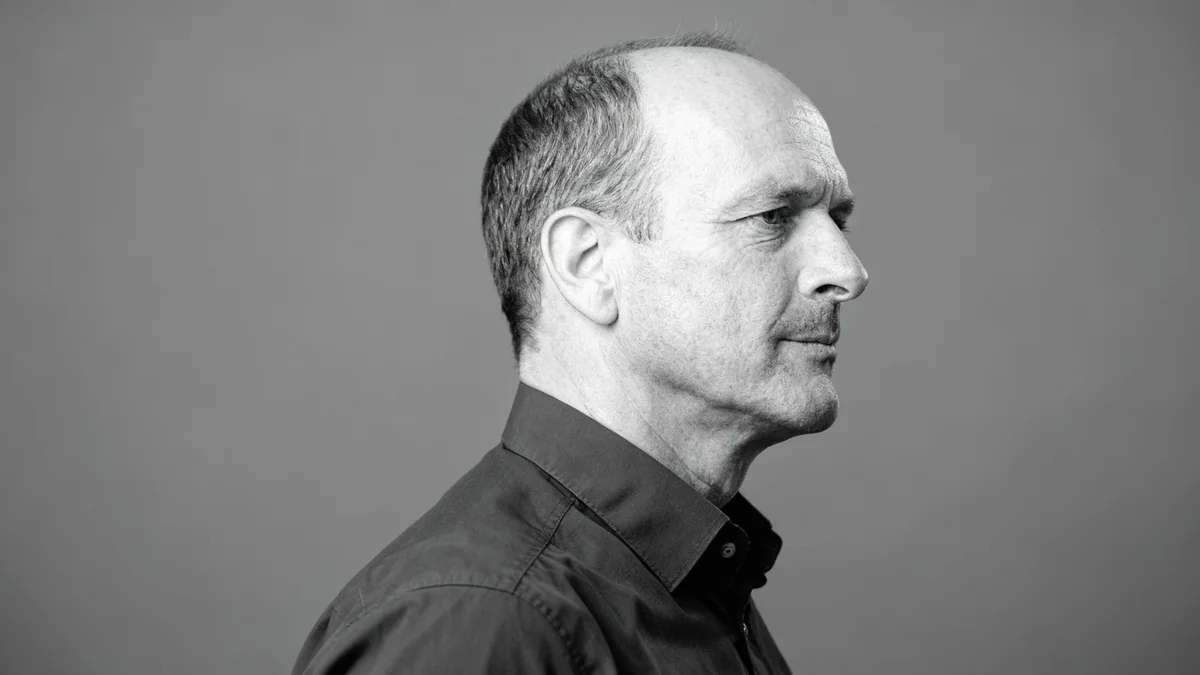

Stefan Trechsel, a prominent Swiss jurist and influential figure in international law, passed away shortly before Christmas in Bern at the age of 88. His career spanned decades, marked by significant contributions to criminal law and human rights.
Key Takeaways
- Stefan Trechsel died at 88 in Bern.
- He served as President of the European Commission of Human Rights.
- Trechsel was a judge at the International Criminal Tribunal for the former Yugoslavia.
- He held professorships at the Universities of St. Gallen and Zurich.
- Colleagues remember him as a brilliant and warm personality.
A Distinguished Career in Law and Human Rights
Trechsel's extensive career saw him hold several key positions both in Switzerland and on the international stage. He was widely recognized as one of Switzerland's most important legal scholars.
His work had a lasting impact on the interpretation and application of criminal law and human rights principles. Many legal professionals across Europe felt his influence.
Notable Roles
- President, European Commission of Human Rights
- Judge, International Criminal Tribunal for the former Yugoslavia
- Public Prosecutor, Bern
- Professor, University of St. Gallen
- Professor, University of Zurich
Born in Bern in 1937, Stefan Trechsel began his legal education at the University of Bern. His father was a pastor in Boltigen, and his mother came from a Jewish family in Berlin. This background likely shaped his perspectives on justice and humanity.
Early Career and International Service
From 1971 to 1975, Trechsel served as a public prosecutor in Bern. This early experience provided a strong foundation for his later work. His commitment to justice was evident from the start.
In 1975, he was elected as a member of the European Commission of Human Rights. He remained with the commission until 1999. During this period, he advanced through various roles.
Leadership at the European Commission
He first served as a member, then as Vice-President, and later as President of a Chamber. Ultimately, he became the President of the entire Commission. This role solidified his reputation as a leading figure in human rights.
His tenure at the Commission coincided with critical periods in European history. He helped shape human rights jurisprudence during times of significant political and social change.
The European Commission of Human Rights
The European Commission of Human Rights was an international judicial body that existed from 1954 to 1999. It served as the first instance of adjudication for individual applications alleging violations of the European Convention on Human Rights, before cases were referred to the European Court of Human Rights. Its role was crucial in the early development of human rights protection in Europe.
Academic Contributions and Later International Work
Alongside his international commitments, Trechsel maintained a strong presence in academia. He was an ordinary professor of criminal and criminal procedural law at the University of St. Gallen from 1979 to 1999. He then moved to the University of Zurich, where he taught from 1999 to 2004.
His academic work influenced generations of law students and scholars. He was known for his rigorous approach and deep understanding of legal principles.
"Stefan Trechsel was a brilliant lawyer with a charming and warm personality. He was a great jurist for Bern and Switzerland."
After retiring from his professorship, Trechsel continued his international work. In 2005, he was elected as a judge to the International Criminal Tribunal for the former Yugoslavia (ICTY). He served in this capacity until 2013.
The ICTY played a vital role in prosecuting individuals responsible for serious violations of international humanitarian law committed in the former Yugoslavia. Trechsel's experience and expertise were invaluable in these complex proceedings.
International Impact
Trechsel's involvement in the ICTY underscored his dedication to international justice. He contributed to accountability for war crimes and crimes against humanity, leaving a lasting legacy in international criminal law.
A Legacy of Compassion and Justice
Beyond his formal roles, Stefan Trechsel was known for his personal humanity. According to retired journalist Peter Schibli, Trechsel and his wife regularly welcomed persecuted individuals into their home. This act of compassion highlights his deep commitment to human rights on a personal level.
He also contributed to public discourse on critical social issues. For example, in February 2005, he participated in a media event in Bern discussing female genital mutilation in Switzerland. This shows his willingness to address challenging topics and advocate for vulnerable populations.
Trechsel was also a member of the Board of Trustees and the expert advisory board of the Max Planck Institute for Foreign and International Criminal Law and Criminology for twelve years. This involvement further illustrates his broad engagement with legal scholarship and research.
His passing marks the end of an era for Swiss and international legal communities. Stefan Trechsel leaves behind a legacy of integrity, intellectual brilliance, and unwavering dedication to justice and human rights.
Colleagues and friends have expressed their condolences, remembering him as a towering figure in law who combined sharp intellect with genuine warmth.