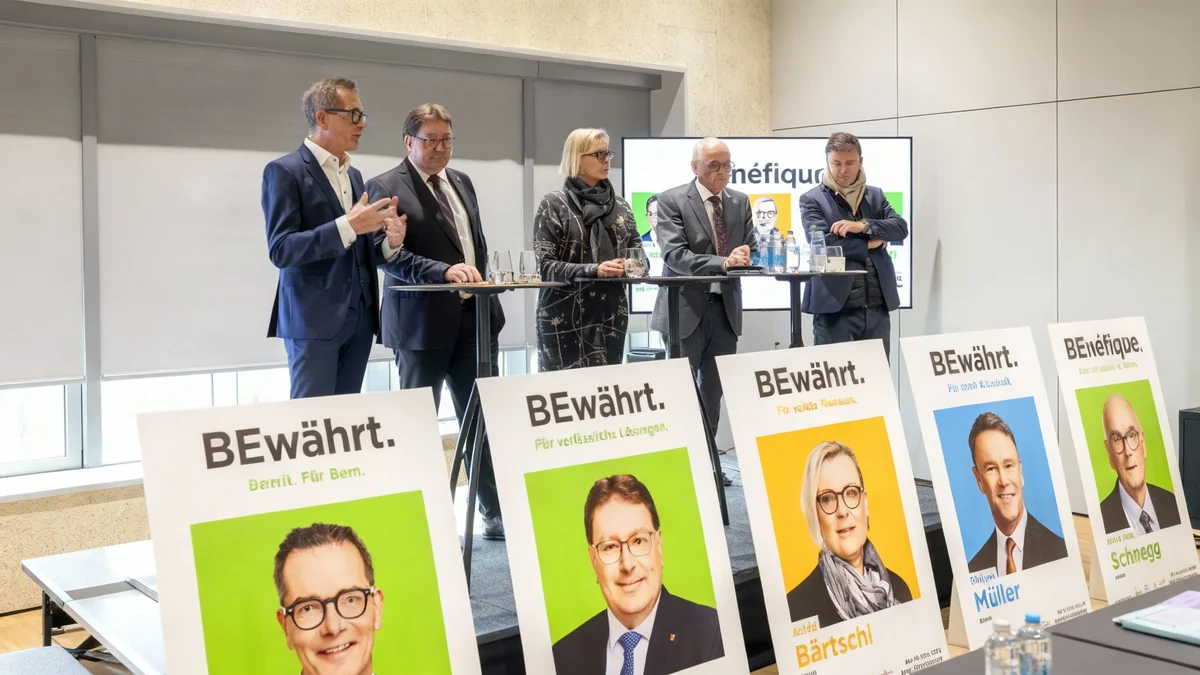



A coalition of Bern's civic parties has announced its strategic platform for the 2026 cantonal elections, focusing on significant tax reductions, economic deregulation, and enhanced public security. The alliance, comprising the SVP, FDP, The Centre (Mitte), and EDU, presented a five-person ticket featuring three incumbents and two new candidates who will champion the ten-point program.
The platform aims to position the Canton of Bern as a more competitive and resilient region by lowering the tax burden towards the Swiss cantonal average and streamlining administrative processes for businesses and individuals. The elections for the cantonal government and the Grand Council are scheduled for March 29, 2026.
Key Takeaways
- A five-candidate ticket from SVP, FDP, and The Centre will run in the 2026 cantonal elections.
- The core of their platform is a ten-point plan focused on tax cuts, economic growth, and security.
- The alliance aims to gradually lower corporate profit taxes and continue reducing personal income taxes.
- Proposals include simplifying construction permits and shifting healthcare towards more outpatient services.
- The coalition emphasizes making the canton more resilient against crime and global economic pressures.
A Five-Candidate Ticket for 2026
The civic alliance is putting forward a unified front for the upcoming election cycle. The ticket includes three current members of the cantonal government seeking re-election: Astrid Bärtschi (The Centre), Pierre Alain Schnegg (SVP), and Philippe Müller (FDP).
They are joined by two new candidates from the SVP, Grand Council members Raphael Lanz and Daniel Bichsel. This five-person team will collectively campaign on the newly unveiled ten-point program, signaling a coordinated effort to maintain and expand their influence in the cantonal government.
The Civic Alliance Coalition
The "Bürgerliche Allianz" is a coalition of centre-right and right-wing political parties in Bern. It includes the Swiss People's Party (SVP), FDP.The Liberals (FDP), The Centre (Die Mitte), and the Federal Democratic Union (EDU). Their collaboration aims to secure a majority in the cantonal government to advance policies related to fiscal conservatism, economic freedom, and traditional values.
Economic Strategy: Lower Taxes and Less Bureaucracy
A central pillar of the alliance's platform is a comprehensive strategy to bolster the canton's economy. The plan calls for a significant reduction in the tax burden, which the coalition argues is necessary to improve Bern's attractiveness for businesses and residents.
Finance Director Astrid Bärtschi highlighted the existing tax strategy, which provides a clear roadmap. "This plan outlines how the tax burden in the canton can finally be lowered towards the midfield of the cantons," she stated during the press conference.
The program specifically proposes a gradual reduction of corporate profit taxes and further cuts to personal income taxes. This move is designed to stimulate investment and create jobs.
"A strong economy benefits everyone, but we know: a strong economy doesn't fall from the sky," said candidate Raphael Lanz. He stressed that growth happens where innovation is possible and energy is reliable.
Lanz also advocated for a shift in the administration's mindset. "The canton should not be a blocker, but an enabler – this attitude is also needed in the administration," he added, calling for more liberal framework conditions, particularly for small and medium-sized enterprises (SMEs).
Streamlining Construction and Development
To further reduce red tape, the platform targets the construction sector. Candidate Daniel Bichsel explained that many developed areas in the canton are underutilized or hindered by excessive regulations. The plan suggests optimizing approval processes, in some cases replacing mandatory permits with simple notifications.
The coalition also supports advancing digitalization in the planning and construction sectors to increase efficiency. Key infrastructure projects, such as the planned transport upgrades in the Emmental and Oberaargau regions, are also prioritized.
Enhancing Security and Reforming Healthcare
Alongside its economic agenda, the alliance presented robust plans for public safety and healthcare modernization. Security Director Philippe Müller emphasized the need for a more resilient canton in response to a deteriorating international and national security situation.
Focus on Public Safety
The ten-point plan includes specific measures to combat organized crime, including burglary rings and clan structures, as well as cybercrime and violent offenses. The goal is to strengthen law enforcement and improve the canton's ability to respond to emerging threats.
"It is important to make the Canton of Bern more resilient," Müller said, linking security directly to the canton's overall stability and prosperity.
A New Model for Healthcare
In the health sector, the platform anticipates a major shift in how care is delivered. Health Director Pierre Alain Schnegg outlined a vision that moves away from traditional, long-term hospitalizations.
"Healthcare will change, away from hospitals and long inpatient stays in a hospital bed, towards more outpatient procedures followed by a recovery phase at home," Schnegg explained.
To facilitate this transition, the plan calls for enlarging hospital regions and fostering greater collaboration between healthcare providers. This strategy aims to improve efficiency and adapt the system to modern medical practices while managing costs.
Navigating Future Challenges
The alliance acknowledged the complex global environment in which Bern operates. Astrid Bärtschi noted that the coming years will likely be shaped by ongoing global economic and geopolitical disruptions, the digital transformation, and the demands of sustainable development.
The ten-point program is positioned as a proactive strategy to navigate these challenges. By focusing on efficiency, innovation, and strengthening the canton's core economic and social structures, the coalition believes it can keep Bern on a positive trajectory.
The platform's success will now depend on its reception by voters ahead of the cantonal elections on March 29, 2026. The civic alliance is betting that its message of lower taxes, economic freedom, and security will resonate across the canton.