

The Swiss Federal Roads Office (Astra) is facing parliamentary questions over its multi-million franc communications budget following revelations of large contracts awarded to external public relations firms. The spending has drawn criticism for its scale and timing, particularly in relation to the recently rejected national motorway expansion plan.
Several members of the National Council have formally requested answers from the federal government, raising concerns about the use of taxpayer money for what they describe as promotional campaigns rather than neutral public information.
Key Takeaways
- The Federal Roads Office (Astra) is under investigation for its high spending on external PR agencies, with annual costs exceeding CHF 5 million.
- One firm, Farner, received contracts totaling CHF 8.2 million for communications, including for the failed motorway expansion project.
- A CHF 3.8 million visitor pavilion in Bern is now in limbo after voters rejected the projects it was designed to promote.
- Green National Councillor Florence Brenzikofer and others have filed parliamentary inquiries demanding transparency from Federal Councillor Albert Rösti.
Millions Spent on External Communications
Concerns center on the significant sums paid to some of Switzerland's most prominent PR companies. Records show that the agency Farner alone was awarded contracts worth 8.2 million Swiss francs in recent years. Much of this work was related to communications surrounding major infrastructure projects, including the controversial A1 motorway expansion.
Astra's total annual expenditure for public relations activities has reportedly surpassed CHF 5 million, with figures indicating an upward trend. A significant portion of these contracts were awarded through non-competitive bidding processes, a practice that has intensified the scrutiny.
Spending at a Glance
- Over CHF 5 Million: Astra's annual budget for public relations.
- CHF 8.2 Million: Total contracts awarded to the PR firm Farner in recent years.
- CHF 4.9 Billion: The estimated cost of the motorway expansion projects rejected by voters.
Link to Rejected Motorway Vote
The spending revelations emerged during the heated public debate over a 4.9 billion franc plan to expand six sections of the national motorway network. Opponents of the expansion argued that Astra's communications campaign was not impartial, accusing the office of downplaying the environmental and noise impacts of the projects.
On November 24, 2024, Swiss voters rejected the proposal, with 52.7 percent voting no. This outcome has cast a new light on the funds spent promoting the projects and has led to direct consequences for at least one major promotional investment.
The Referendum's Impact
The rejection of the motorway expansion has halted several key infrastructure projects. In response, Federal Councillor for Transport Albert Rösti commissioned a report from ETH Professor Ulrich Weidmann to reassess the future of infrastructure development, further clouding the path forward for projects that were once considered certainties.
The Fate of a CHF 3.8 Million Visitor Pavilion
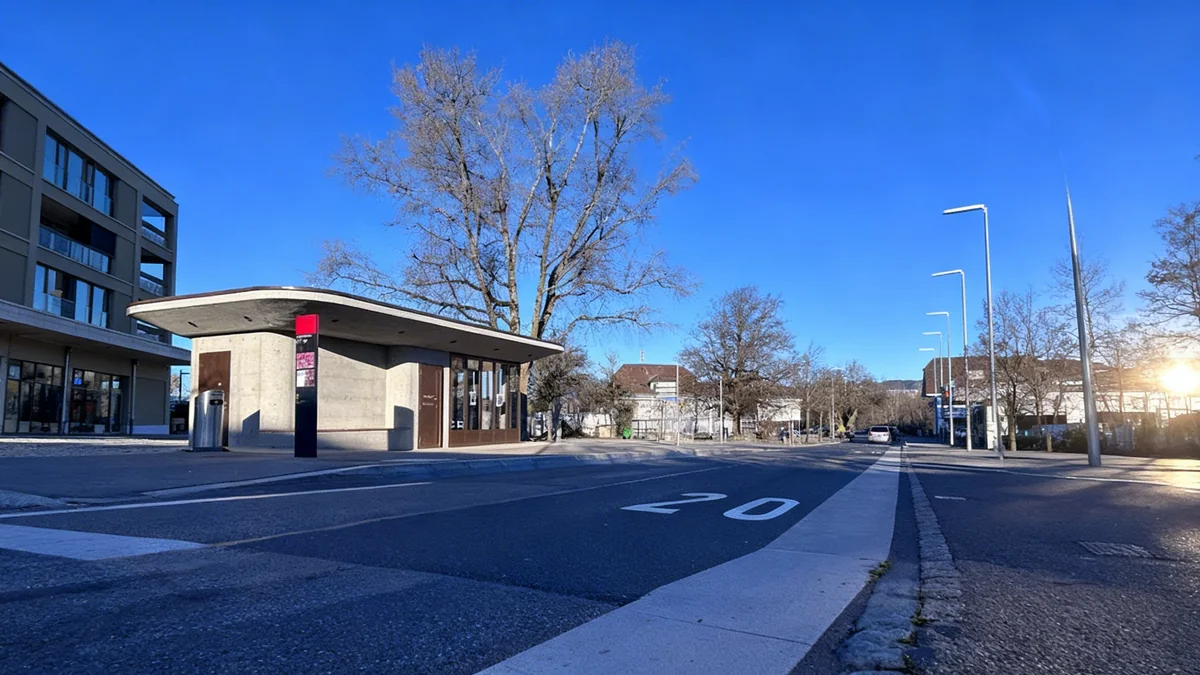
A prime example of the fallout is a high-tech visitor pavilion in Bern-Wankdorf. The facility, built at a cost of CHF 3.8 million, was intended to showcase four major motorway projects planned for the region. The project went ahead even after a referendum on the expansions had been announced.
The pavilion features advanced technology, including an interactive panoramic wall and a "Holo-Deck," which alone cost CHF 1.2 million. However, with three of the four featured projects now either canceled or under review following the public vote, the pavilion's purpose is unclear. Its scheduled opening has been delayed as Astra re-evaluates its concept.
Parliament Demands Answers
The spending and the pavilion's uncertain future have now triggered a political response. Green National Councillor Florence Brenzikofer has submitted a formal inquiry, known as an interpellation, to the Federal Council, demanding an explanation for what she terms "exorbitant PR costs."
"The primary goal seems to be presenting the federal office and its projects in the best possible light," Brenzikofer stated. She described the agency's approach as a "nonchalant handling of taxpayer money," which she finds particularly troubling in a time of federal budget cuts.
Brenzikofer argues that the administration has a duty to promote sustainable and energy-efficient mobility. She believes Astra's communication during the motorway campaign failed to meet this standard.
"It is democratically disconcerting that Astra does not appear to provide factual or objective information," she added, expressing hope for "clear and transparent answers" from Federal Councillor Albert Rösti, whose department oversees Astra.
Brenzikofer is not alone in her concerns. Fellow Green party members Franziska Ryser and Aline Trede have also filed inquiries, citing a lack of transparency and alleging that the agency engaged in "whitewashing" to promote its agenda. The Federal Council is now expected to provide a formal response to these parliamentary questions in the coming weeks.