


Swiss President Guy Parmelin signed new agreements with the European Union today in Brussels. This signing took place despite strong opposition from his own party, the Swiss People's Party (SVP), which staged a protest on Bundesplatz in Bern just hours later.
The new package of agreements, known as "Bilateral III," has sparked significant debate within Switzerland, particularly concerning the country's democratic rights and sovereignty.
Key Takeaways
- President Guy Parmelin signed new EU agreements in Brussels.
- The SVP protested against the treaties in Bern, calling it a "dark day."
- Concerns about Swiss popular rights and sovereignty are central to the opposition.
- Parmelin reportedly signaled his disapproval by wearing a black tie and avoiding smiles.
- The SVP plans to gather signatures for a referendum against the treaties.
Parmelin's Brussels Visit and Subtle Protest
Bundespräsident Guy Parmelin met with EU Commission President Ursula von der Leyen in Brussels. The purpose of this meeting was the formal signing of the new treaty package. This event marks a significant moment in Switzerland's foreign policy relations.
Sources close to the matter revealed that Parmelin's demeanor and attire during the signing were not accidental. He purposefully wore a black tie, which insiders suggest was a subtle sign of protest against the agreements. Additionally, he reportedly made an effort to avoid smiling in photographs taken at the event.
Fact Check
The signing of "Bilateral III" represents one of the most significant foreign policy decisions for Switzerland in recent years. It aims to solidify and update the relationship between Switzerland and the EU.
SVP Protests in Bern: A "Dark Day"
Hours after the signing in Brussels, the SVP organized a protest on Bundesplatz in Bern. Party leaders and members gathered to voice their disapproval of the newly signed treaties. The party had already expressed its strong opposition in the invitation to the protest, stating the Federal Council "once again disregards our democratic popular rights."
During the protest, SVP National Councillor Magdalena Martullo-Blocher and Party President Marcel Dettling addressed the crowd. They described the day as a "dark day" for Switzerland. The party argues that the "Bilateral III" package undermines Swiss popular rights.
"It is a 'dark day' for Switzerland," stated Marcel Dettling, SVP Party President, during the protest. "The treaty package tramples on Swiss popular rights."
Symbolic Actions and Previous Incidents
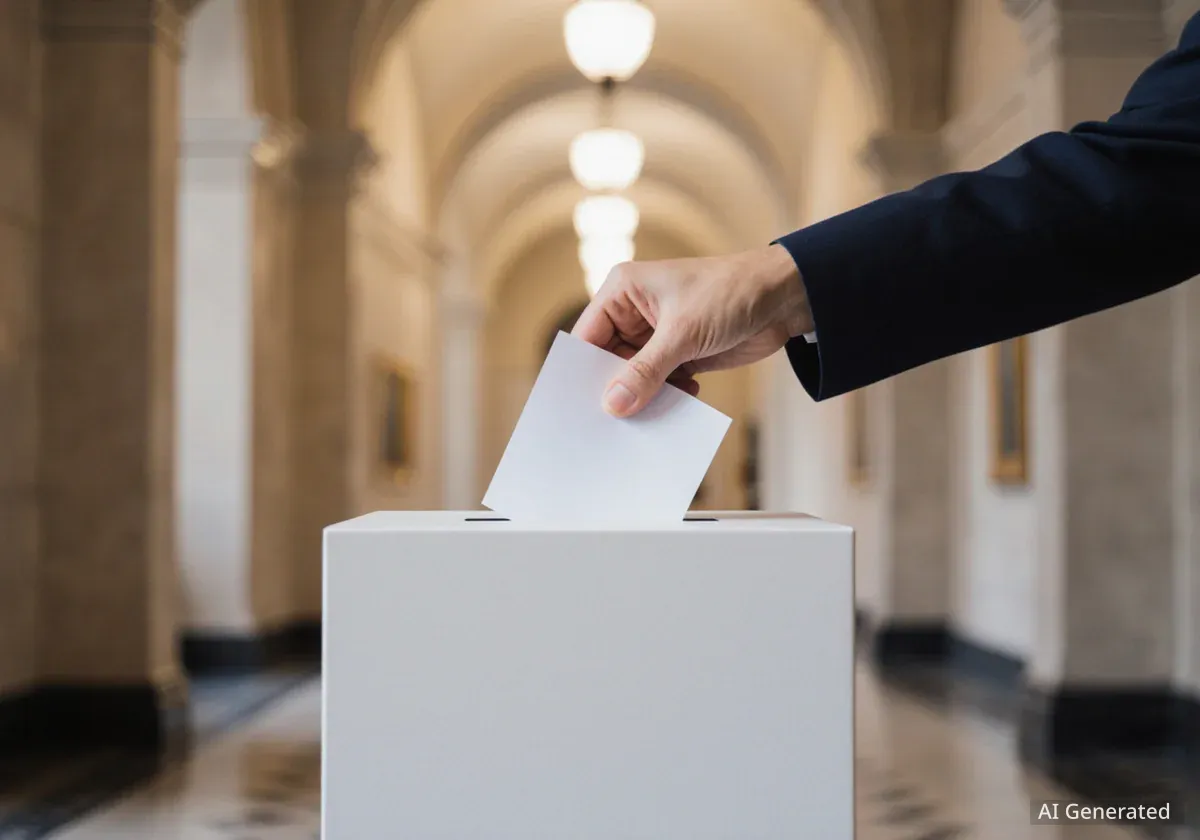
The protest featured symbolic actions. A large caricature depicting the EU kicking away a Swiss ballot box was displayed, symbolizing the party's concerns about national sovereignty and direct democracy. Marcel Dettling was also photographed posing with the treaty papers, which he symbolically "stabbed" with a halberd for the cameras.
Bern police confirmed that the protest event had received official authorization. This stands in contrast to a similar SVP action in December 2024, where the party faced a fine for not obtaining the necessary permit.
Understanding Bilateral Agreements
Switzerland and the EU have a complex relationship governed by a series of bilateral agreements. These agreements cover various sectors, from trade and free movement of people to research and agriculture. "Bilateral III" seeks to update and expand this framework.
The Debate Over Popular Rights
A core criticism from the SVP focuses on the perceived disregard for Switzerland's direct democratic processes. The party contends that while the Federal Council acknowledges the importance of these agreements, it resists holding a mandatory popular vote on the matter.
Despite this, Marcel Dettling confirmed the SVP's intention to collect the 50,000 signatures required to trigger a referendum. This move would allow the Swiss people to have a direct say on the "Bilateral III" treaty package.
- The SVP emphasizes the importance of popular referendums in Swiss democracy.
- The party aims to gather 50,000 signatures to force a national vote.
- This mechanism allows citizens to challenge parliamentary decisions.
Future Implications and Public Opinion
The signing of these treaties and the immediate public backlash highlight the ongoing tension between Switzerland's need for international cooperation and its commitment to direct democracy. The debate is expected to intensify as the SVP proceeds with its referendum efforts.
Public opinion remains divided. Some citizens view the treaties as crucial for Switzerland's economic stability and international standing. Others share the SVP's concerns, believing that the agreements could compromise Swiss sovereignty and democratic traditions. The upcoming referendum, if successful, will be a critical test for the future direction of Swiss-EU relations.