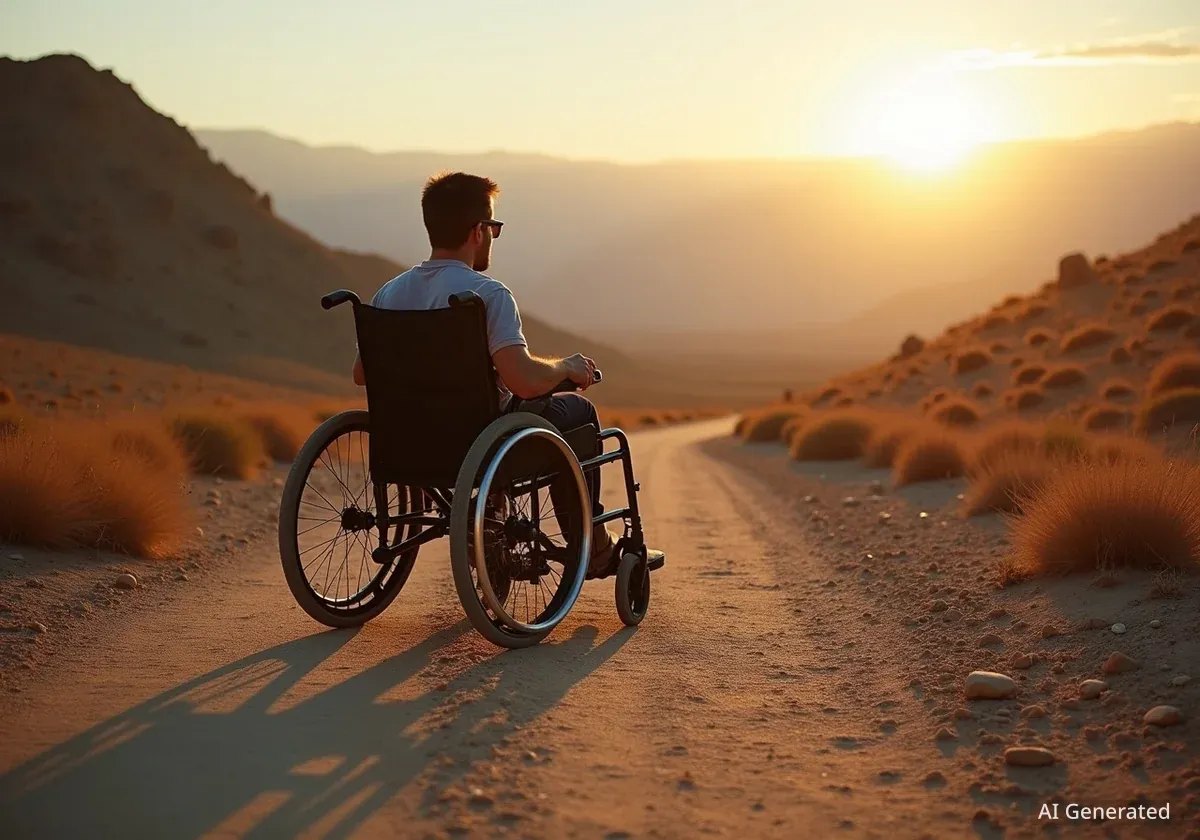




Roland Bigler, a Bern resident, has spent nearly four decades traveling the world in a wheelchair, defying expectations and inspiring others. His journeys span continents, from the Caribbean to Africa and Australia, proving that accessible travel extends beyond infrastructure to human connection and resourcefulness.
Key Takeaways
- Roland Bigler, a tetraplegic since age 20, travels extensively in his wheelchair.
- He relies on local support and human kindness in remote destinations.
- Bigler demonstrates that barrier-free travel is often about human interaction, not just infrastructure.
- He now advises other wheelchair users on individual travel plans.
A Life Transformed, Not Limited
At the age of 20, a diving accident profoundly changed Roland Bigler's life. A headfirst dive into the sea resulted in a severe neck injury, leaving him paralyzed from the chest down with immobile fingers. This life-altering event occurred nearly four decades ago. Instead of deterring him, the incident ignited an even stronger desire to explore the world.
Bigler quickly adapted to his new circumstances. He developed a unique one-finger typing system for keyboards and found innovative ways to manage daily life. His passion for travel, a constant companion throughout his life, only intensified after the accident.
Interesting Fact
Roland Bigler has visited numerous countries across the globe, including remote areas like Chad and Kenya, proving that adventure is accessible.
Embracing the Unexpected: Travel Beyond Comfort Zones
Bigler's travels are far from conventional package holidays. He actively seeks out destinations that might seem challenging for a wheelchair user, such as Chad. He acknowledges that such places are not for everyone, requiring significant reliance on the generosity of local communities.
He recounts experiences in countries like Kenya, Chad, and Cuba, where he found people to be incredibly helpful. He describes being lifted into boats that initially seemed impossible to board. These interactions highlight his belief that human kindness is often the most vital aspect of accessible travel.
"In Kenya, Chad, or Cuba, people are extremely helpful," Bigler states. "They would lift me into boats where you previously thought it could not possibly work."
Safari Adventures and Australian Explorations
Kenya holds a special place in Bigler's heart, a country he has visited multiple times. He even embarked on a safari there, made possible by a specialized tour operator providing adapted vehicles and accommodations. This experience challenges common perceptions about the limitations of wheelchair travel.
He also spent a full year in Australia with his partner, seven months of which involved living in a tent. Australia remains one of his favorite destinations. He often recognizes Australians worldwide, noting their casual offer of help: "Do you need a hand, mate?"
Background Information
Tetraplegia, also known as quadriplegia, is a condition where paralysis affects all four limbs and the torso. This often results from a spinal cord injury, impacting motor and sensory functions.
Beyond the Beach: A Different Approach to Travel
Bigler finds little appeal in typical Mediterranean beach holidays. He explains that spending a week on a beach in a wheelchair while others observe is not his preferred way to experience a destination. He also avoids group tours, citing the need for too many compromises and organizational hurdles.
His infectious laughter often punctuates conversations, reflecting a cheerful and pragmatic outlook. He acknowledges certain limitations, such as Mount Everest, but believes that most barriers are less about physical infrastructure and more about human connection. For Bigler, travel is about engaging in conversations, fostering closeness, and creating memorable encounters.
- Individualized experiences: Bigler prioritizes unique, personal journeys over standardized tours.
- Human connection: He values interactions with local people as crucial to his travel experiences.
- Overcoming perceptions: His travels aim to break down barriers and change perspectives on disability.
Inspiring Others: A Consultant for Accessible Travel
Since 2014, Roland Bigler has channeled his vast travel experience into a professional role. He proposed the creation of a new position at Globetrotter, a travel agency, where he now advises other wheelchair users. Based in the Liebefeld branch near Bern, he provides peer-to-peer consultations.
He specializes in planning individual trips, meticulously clarifying every detail. This includes ensuring step-free hotel entrances and confirming elevator dimensions. His personal experiences have taught him the critical importance of seemingly minor details, such as three unmentioned steps leading to a lift.
Key Data Point
Roland Bigler has been a professional travel advisor for wheelchair users since 2014, leveraging his personal experiences to assist clients.
Bigler assists a diverse clientele, including couples, families, and solo travelers. He helps plan city breaks to London, honeymoons in Kenya, and even first-time adventures. Many clients express surprise at the possibilities he unveils. "I didn't know that a safari in a wheelchair was even possible," he recounts with a smile.
He describes an "incredible feeling of freedom" when traveling. Bigler identifies himself as an eternal optimist, for whom giving up is never an option. His vision is barrier-free travel, a vision he actively embodies, not through loud advocacy, but through each journey and every new encounter.