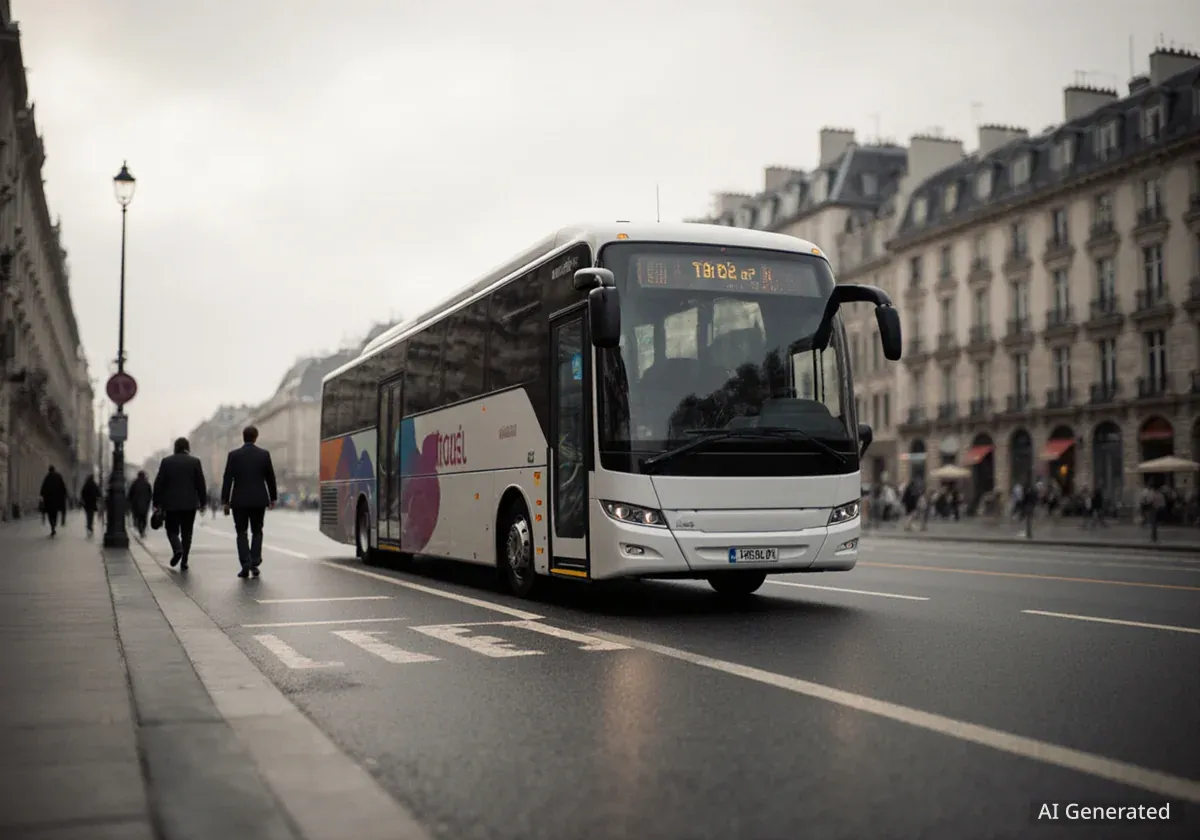


The Bern City Council has introduced a new concept for coach and tour bus traffic, aiming to reduce congestion and improve visitor flow. The proposed measures include mandatory online reservations for parking spaces located outside the city center, along with designated drop-off and pick-up points within the downtown area.
This initiative seeks to streamline bus operations and minimize the search for parking, which often contributes to traffic issues in the Swiss capital. The public consultation period for these changes is currently underway, set to conclude at the end of April.
Key Takeaways
- New concept for tour buses in Bern introduced for public consultation.
- Mandatory online reservations for parking outside the city center.
- Designated drop-off and pick-up points in the city center.
- A fee of 50 Swiss francs proposed for reserved parking.
- Neufeld bus terminal to be expanded into a full-fledged facility.
Regulating Tour Bus Access to Bern's Center
The core of the new plan involves redirecting tour bus parking away from Bern's historic city center. Currently, buses often circulate in search of available spots, causing unnecessary traffic and environmental impact. The city council's proposal introduces a structured system to manage these movements more effectively.
Under the new rules, tour operators will need to reserve a parking spot online before arriving in Bern. This reservation will also grant a permit for buses to use specific designated areas within the city center for passenger drop-off and pick-up. Once passengers have disembarked, buses must proceed to their pre-booked parking location outside the central zone.
Fact: Saas-Fee/Saastal Tourism Boom
Saas-Fee/Saastal is experiencing its strongest tourism results in 15 years, recording 1.28 million overnight stays in the 2024/2025 business year. This growth highlights the increasing demand for Swiss destinations.
Proposed Fees and Infrastructure Development
A significant aspect of the new concept is the introduction of a fee for reserved parking. The city council proposes a charge of 50 Swiss francs per reservation. This fee is designed to cover the operational costs of the new system and is comparable to charges in other popular tourist destinations.
According to the Bern City Council, the implementation of cost-covering fees will ensure the long-term economic sustainability of the new infrastructure. This financial model aims to create a self-sufficient system that manages the increased volume of tourist traffic without burdening local taxpayers.
"The introduction of cost-covering fees will ensure the economically sustainable use of the infrastructure," stated the Bern City Council in its official communication.
Expansion of Neufeld Bus Terminal
A key component of Bern's long-term strategy is the development of the Neufeld bus terminal. The city plans to transform this location into a comprehensive long-distance and tour bus terminal. This expansion will provide a central hub for bus operations, further reducing the need for buses to enter the city center for parking.
The city is currently working on the operational and financing models for this expansion. A construction project is also in development. A credit request for the project is expected in the second half of 2026. This move reflects a broader effort to modernize Bern's transport infrastructure to meet growing tourism demands.
Context: Tourism Growth in Switzerland
Switzerland's tourism sector continues to see robust growth. Destinations like Monte Tamaro are expanding their offerings, with the mountain starting its first winter season after more than two decades of summer operations. This diversification helps boost year-round occupancy for hotels and attractions across the country.
Public Consultation and Future Flexibility
The public consultation for the new coach and tour bus concept began recently and will run until the end of April. Residents, tour operators, and other stakeholders have the opportunity to provide feedback on the proposed measures. This feedback will be crucial in refining the final implementation plan.
While the concept aims to guide bus traffic towards the new terminal in the long term, the city council emphasizes its flexibility. The plan can adapt to include complementary measures as needed, ensuring it remains responsive to the evolving needs of tourism and urban mobility.
The focus on structured parking and designated drop-off points reflects a growing trend in urban planning for popular tourist cities. By managing bus traffic more efficiently, Bern hopes to enhance the visitor experience while preserving the quality of life for its residents.
Digital Innovations in Swiss Tourism
Across Switzerland, the tourism industry is embracing digital solutions. Zürich Tourism, for example, is using advanced chatbots and AI to provide personalized travel experiences. These tools leverage local expert knowledge to deliver curated content, making trip planning more efficient and tailored to individual preferences. Basel Tourism also uses AI to streamline recurring tasks.
- AI-powered chatbots offer personalized travel itineraries.
- Curated content provides specific local insights.
- Digital tools enhance efficiency for tourism organizations.
These technological advancements are becoming increasingly important as the tourism sector faces new challenges, including the demand from a younger generation of travelers who expect high-quality, personalized experiences.
The Broader Picture of Swiss Tourism
The initiatives in Bern are part of a wider trend in Swiss tourism to adapt and innovate. Hotel industry associations, such as HotellerieSuisse Graubünden, are focusing on strategies to improve margins and increase year-round occupancy. This includes exploring new business models and enhancing existing offerings.
The Aargauhotels group recently acquired two properties in the Aargau Seetal region, integrating them into their regional network while maintaining independent management. This consolidation and strategic expansion demonstrate confidence in the local tourism market.
Even niche tourism, like glacier tourism, is experiencing a boom. However, this growing interest also brings challenges, as the very landscapes attracting visitors are threatened by climate change. This highlights the need for sustainable tourism practices and careful management of natural resources.
Education also plays a vital role. Catherine Raemy, head of IST Higher Technical School for Tourism and Outdoor, emphasizes the importance of practical training and managing high-frequency destinations. Her work focuses on preparing the next generation of tourism professionals to meet these complex demands.