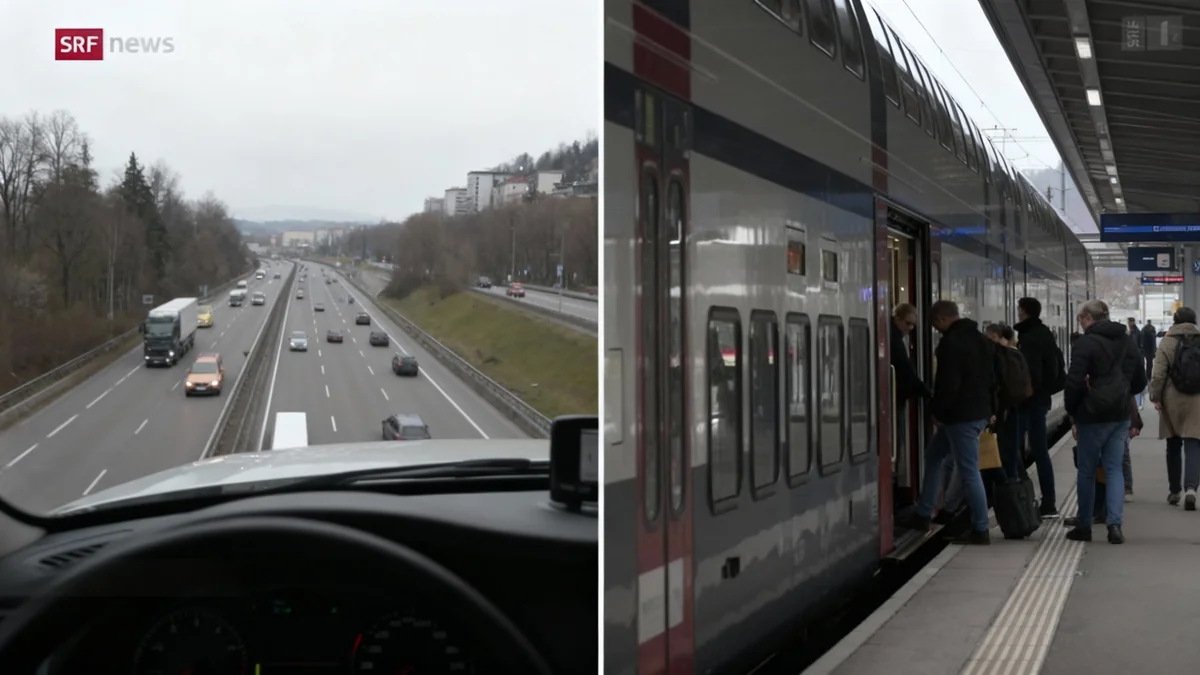


Switzerland is set to embark on a significant overhaul of its transportation networks, with the Federal Council approving key parameters for infrastructure development stretching to 2045. The ambitious plan focuses on enhancing railway capacity and alleviating bottlenecks in the national road system, while also strategically dropping several proposed national road projects.
For the first time, the Federal Council will integrate planning for both rail and road networks, aiming for a unified approach. This strategy prioritizes projects, especially in rail, where demand for new construction exceeds available funding. The comprehensive plan seeks to ensure the country's transport infrastructure meets future needs.
Key Takeaways
- Federal Council approves 2045 infrastructure plan.
- Focus on increasing rail capacity and easing road congestion.
- Integrated planning for both rail and road networks.
- Around 24 billion Swiss francs allocated for rail expansion by 2045.
- Specific projects include quarter-hour train service between Bern and Zurich by 2035.
Integrated Vision for Future Mobility
Transport Minister Albert Rösti emphasized the long-term perspective of these decisions during a press conference in Bern. He stated that transport projects require decades of planning to be ready when needed. This forward-thinking approach aims to secure essential infrastructure for the next generation.
"Transport projects must be planned decades in advance so they are available when needed," said Transport Minister Albert Rösti. "It is our duty to secure projects for the next generation."
The new strategy marks a departure from previous approaches. It consolidates planning efforts for both road and rail, enabling a more efficient allocation of resources and a clearer set of priorities. This integrated view aims to create a cohesive and sustainable transportation system across the country.
Background on the Plan
The Federal Council commissioned an expert report from ETH Zurich in January 2025. This report was a response to increased costs in railway infrastructure expansion and the public rejection of certain highway expansion projects. The current plan builds upon the findings and analyses from this report and various federal offices.
Significant Rail Network Expansion
The railway network is slated for substantial development in several stages. By 2035, investments totaling approximately 3 billion Swiss francs will enable notable service improvements.
- Quarter-hour frequency between Bern and Zurich.
- Half-hour frequency between Bern and Lucerne.
- Half-hour frequency between Basel and Zurich in the Central Plateau.
- Systematic half-hour frequencies in regional transport services.
- Expanded regional services in the Geneva – Lausanne area.
- Increased frequency between Bellinzona and Locarno.
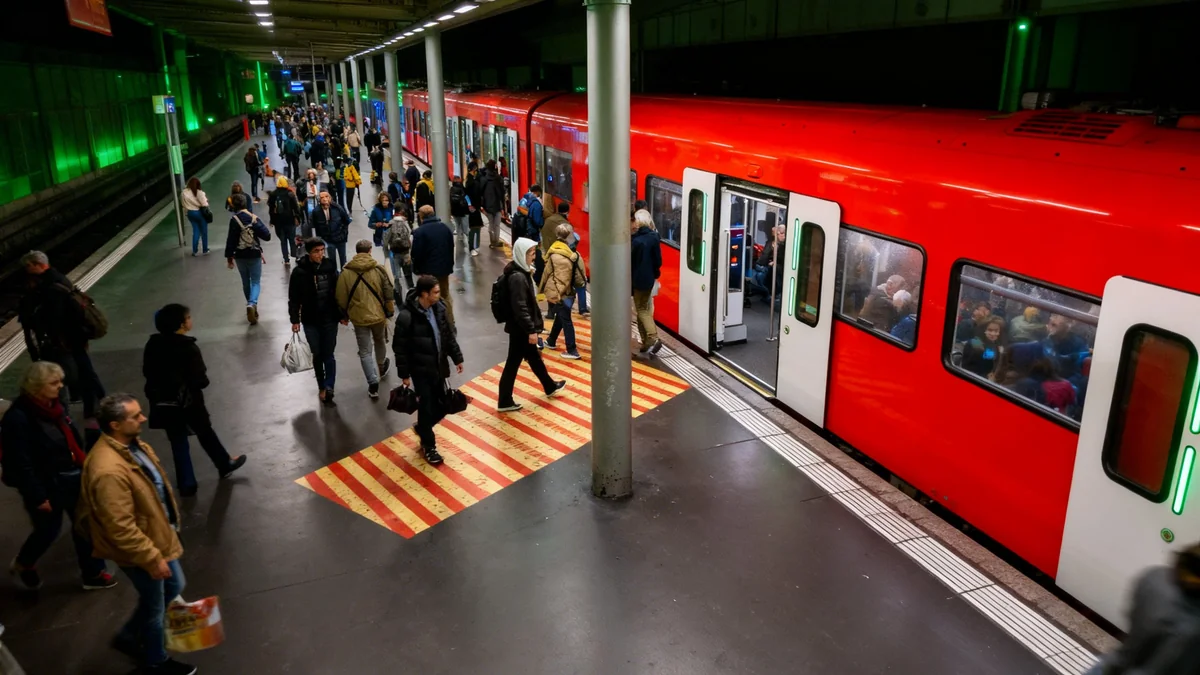
- Longer trains through extended platforms in the Zurich S-Bahn (under review).
To fund these extensive rail projects, the Federal Council proposes extending the value-added tax (VAT) percentage dedicated to the Rail Infrastructure Fund (BIF) beyond 2030. This extension is projected to generate an additional 8 billion Swiss francs by 2045. In total, approximately 24 billion Swiss francs will be available for rail upgrades until 2045.
Regional Perspectives on Rail Development
Regional authorities have largely welcomed the proposed rail investments, though with some specific concerns. Susanne Hartmann, Cantonal Councillor for St. Gallen’s Department of Construction and Environment, expressed satisfaction that the third tube of the Rosenberg Tunnel, including its connection to the freight station, remains a priority project.
Dominik Diezi, Cantonal Councillor for Thurgau’s Department of Construction and Environment, also found the decisions regarding the three most important transport projects in Eastern Switzerland positive. He noted the priority given to the Amriswil bypass with a 2045 timeline was not surprising.
Key Rail Investments
- 3 billion CHF for immediate upgrades by 2035.
- 8 billion CHF additional funding from VAT extension until 2045.
- Total rail investment: 24 billion CHF by 2045.
In Central Switzerland, cantonal governments welcomed two key projects: the four-track underground through-station in Lucerne and the nearly 11-kilometer Zimmerberg Tunnel II, connecting Zug and Thalwil on the Zurich-Lucerne line. Fabian Peter, Construction Director for Lucerne Canton, called it a "good day for Central Switzerland." He expressed satisfaction that the Federal Council recognized the urgent need for rail infrastructure expansion at the Lucerne hub.
Basel also anticipates significant benefits, with the inclusion of the Basel SBB to Badischer Bahnhof underground line in the transport program. This project is expected to expand the S-Bahn system, improving services for residents across three countries and strengthening the economic region. The Federal Council has increased investments for this project from 1.2 billion to 2.5 billion Swiss francs by 2045, significantly exceeding initial estimates.
Strategic Road Network Upgrades
Alongside rail, the Federal Council aims to systematically improve the national road network. The goal is to eliminate bottlenecks, reduce traffic congestion hours, and prevent drivers from using alternative routes through residential areas. Projects with high benefit and quick implementation are given priority.
Nine additional road projects are planned for completion by 2055, with another seven scheduled for after that period. However, more than 30 national road projects will be discontinued. This includes the A1 expansion projects between Schönbühl and Kirchberg in Bern and between Le Vengeron GE and Nyon VD, which voters previously rejected. For these areas, operational measures, such as converting hard shoulders into temporary lanes, will be implemented to manage traffic flow.
Agglomeration Transport Programs
The expansion of rail and road infrastructure is further complemented by the Agglomeration Transport Program. This initiative supports coordinated transport and urban development in densely populated areas. The federal government will financially support major agglomeration programs in Geneva, Lausanne – Morges, Zurich, Aareland, and Burgdorf.
Additionally, the government will propose smaller projects in approximately 40 other agglomerations during the upcoming consultation phase. This ensures that urban centers receive targeted investments to improve local connectivity and reduce traffic pressures.
Road Network Focus
- Prioritizing projects with high benefit and quick implementation.
- 30+ national road projects cancelled due to public rejection or lower priority.
- New focus on operational measures like hard shoulder usage.
The Federal Council’s decision represents a critical step in modernizing Switzerland’s transport infrastructure. It balances the need for increased capacity with environmental considerations and public acceptance, setting a clear course for mobility development over the next two decades.