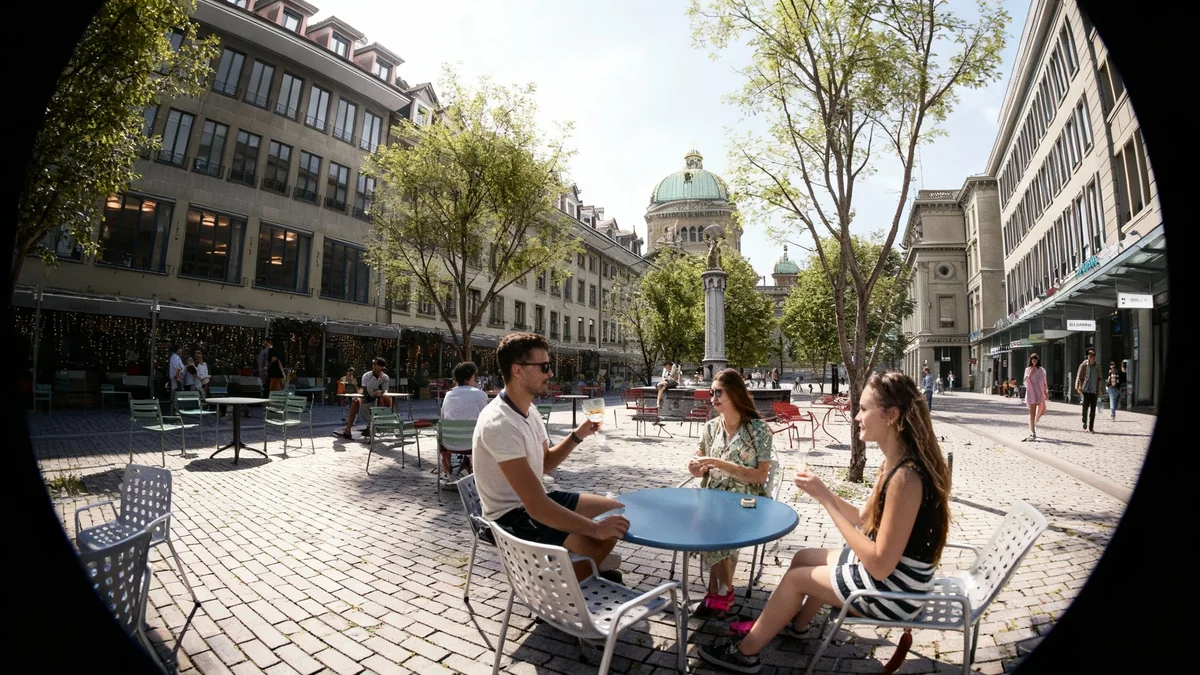


The City of Bern has taken a significant step toward the long-awaited transformation of its central squares, Bärenplatz and Waisenhausplatz. Detailed plans for the 36.7 million Swiss franc project are now available for public review until February 6th, offering a concrete look at the future of this historic urban axis.
The redesign aims to create a more inviting and functional public space by establishing a unified pedestrian-friendly zone. This initiative, which received strong public backing, is set to redefine the experience in the heart of the city for residents, visitors, and local businesses.
Key Takeaways
- Plans for the redevelopment of Bärenplatz and Waisenhausplatz are now on public display.
- The project has a budget of 36.7 million Swiss francs, approved by 73.6% of voters.
- Construction is scheduled to begin in late 2027, with completion expected by 2030.
- The redesign focuses on creating a pedestrian-friendly meeting zone with more green spaces and seating.
A Vision for a Greener, More Accessible City Center
The core of the proposal is to transform the Bärenplatz-Waisenhausplatz axis into a cohesive and welcoming meeting zone. Officials from the city's Directorate for Civil Engineering, Transport and Urban Greenery outlined a vision centered on enhancing the quality of life in the downtown area.
A key feature of the plan is the introduction of more natural elements. Additional trees will be planted to provide natural shade, creating cooler, more comfortable areas during warmer months. These green spaces will be complemented by a significant increase in public seating options, encouraging people to linger and socialize.
To further combat summer heat and improve comfort, the plans also include the installation of mobile sunshades. These flexible structures can be deployed as needed, offering adaptable protection from the sun for markets and public gatherings.
Modernizing Infrastructure and Aesthetics
The transformation goes beyond surface-level aesthetics. The entire axis will be repaved with new paving stones, creating a visually unified and accessible surface. This will help to clearly delineate traffic areas from pedestrian zones, improving safety and flow for everyone.
The project also includes a comprehensive upgrade of essential infrastructure:
- Lighting: The current lighting system will be replaced with a modern, energy-efficient solution designed to enhance the ambiance and security of the squares at night.
- Utilities: Underground utility lines will be renovated and modernized to meet future demands.
- Event Connections: New connections for power and water will be installed, simplifying the logistics for the city's popular markets and numerous public events.
Project by the Numbers
- Budget: 36.7 million CHF
- Voter Approval: 73.6%
- Projected Start: Q4 2027
- Earliest Completion: 2030
- Public Review Period: Ends February 6
A Project Nearly 40 Years in the Making
The desire to improve the heart of Bern is not a new one. The current plans are the culmination of a public conversation that has spanned decades, reflecting a long-held wish for a more people-centric city core.
This journey began nearly four decades ago with a successful public initiative titled "I läbti gärn im Härz vo Bärn" (I would like to live in the heart of Bern). Even then, the public called for more seating and a better overall atmosphere in the central squares. The initiative was approved, but its realization was repeatedly postponed due to financial constraints.
Historical Context: "I läbti gärn im Härz vo Bärn"
The initiative from almost 40 years ago demonstrated a clear public mandate for improving Bern's central public spaces. It highlighted a community desire for a city center that prioritized social interaction and leisure over simple transit. The current project is seen by many as the final fulfillment of that long-standing promise, bringing a historic public vision to life with modern urban design principles.
Planning for the project was officially revived in 2015, leading to the detailed proposal that is now being presented. The strong voter approval in May 2023, with nearly three-quarters of participants in favor, provided a clear and decisive mandate to proceed.
Timeline and Next Steps
With the plans now public, the project enters a crucial phase. The public review period allows citizens and stakeholders to examine the details and provide feedback as part of the formal building permit process. This stage is critical for ensuring transparency and addressing any potential concerns before construction begins.
According to the city's official schedule, construction is slated to commence in the fourth quarter of 2027. Officials note that this timeline is dependent on the smooth progression of the building permit process. Any significant delays or objections could potentially push back the start date.
If the project proceeds as planned, the newly redesigned Bärenplatz and Waisenhausplatz could be fully operational and open to the public sometime in 2030. This multi-year construction phase will require careful management to minimize disruption to the bustling city center, which hosts daily markets, transport links, and significant foot traffic.
The transformation promises a significant enhancement for Bern, turning a key transit and commercial hub into a vibrant public living room designed for the 21st century while honoring a community vision that has been cherished for generations.