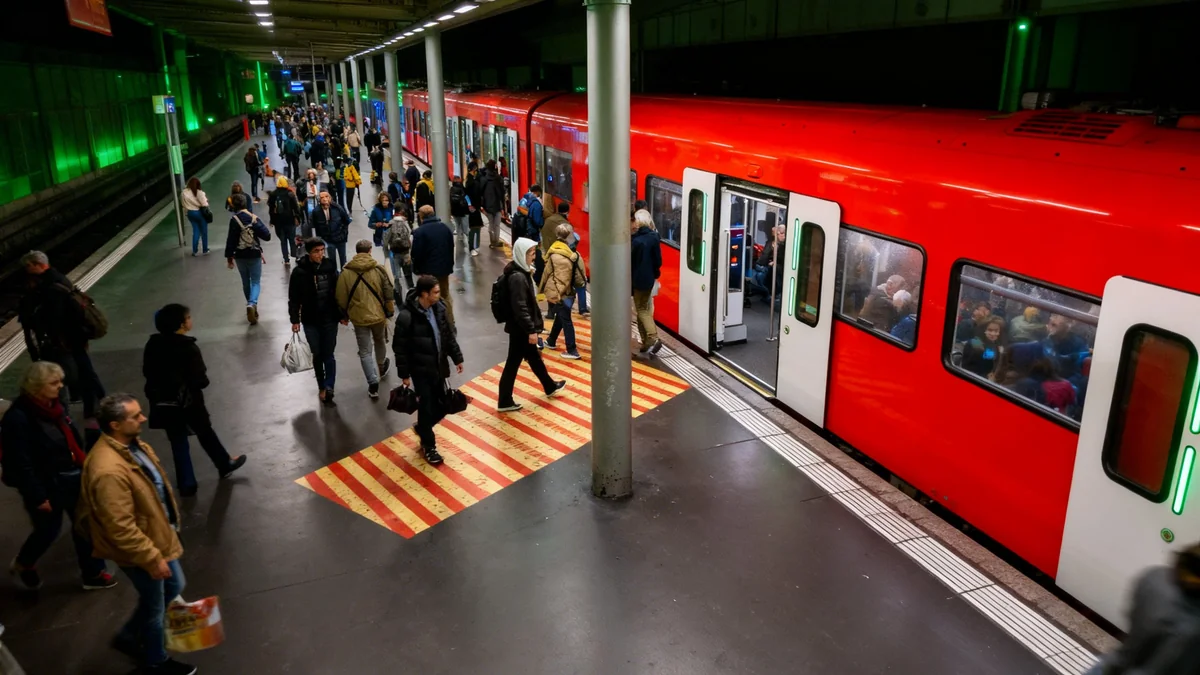



Regionalverkehr Bern-Solothurn (RBS) reported significant growth in passenger numbers for 2025. The transport company carried 26 million passengers across its bus and train networks, marking an increase of over five percent compared to the previous year.
Key Takeaways
- RBS transported 26 million passengers in 2025, a 5% increase.
- Bus passenger numbers rose by 7%, reaching a record 8.4 million.
- Train passengers almost matched pre-pandemic levels at 17.7 million.
- Leisure and weekend travel are growing due to mobile working.
- Punctuality improved for trains but slightly decreased for buses.
Bus Services Set New Records
The bus network experienced its most successful year to date. A total of 8.4 million passengers used RBS buses in 2025. This represents a substantial seven percent rise in ridership compared to 2024 figures.
The increase highlights a growing reliance on public transport for daily commutes and other journeys. It also points to the effectiveness of the RBS bus services in meeting local demand.
Bus Ridership Highlights
- Total Bus Passengers: 8.4 million
- Year-on-Year Growth: 7%
- Busiest Stop: Papiermühle, Bahnhof (approximately 3,700 daily boardings/alightings)
Key Bus Stops and Punctuality
The 'Papiermühle, Bahnhof' stop in Ittigen emerged as the busiest location across the RBS bus network. It recorded around 3,700 daily entries and exits. In contrast, the 'Worblaufen, Babimoosweg' stop saw only about a dozen passengers daily.
While passenger numbers grew, bus punctuality saw a slight dip. It decreased from 88.68 percent in 2024 to 88.37 percent in 2025. This small reduction is primarily attributed to increased traffic congestion and construction-related delays on the road network.
"Traffic congestion and construction work on the road network are the main reasons for bus delays," RBS stated in their recent communication.
Train Network Recovers Towards Pre-Pandemic Levels
RBS trains transported 17.7 million passengers last year. This figure nearly reached the record set in 2019, before the global pandemic. The recovery indicates a strong return to normal travel patterns for many commuters and leisure travelers.
Despite the overall recovery, the impact of mobile working is still evident. Demand at key office locations like Worblaufen and Papiermühle remains 15 to 20 percent below 2019 levels. This suggests a lasting shift in how many people use the train for work-related travel.
The Impact of Mobile Work
The rise of mobile working has fundamentally altered commuting patterns. While overall passenger numbers are recovering, the demand for travel to traditional office hubs remains lower than before the pandemic. This highlights a new landscape for public transport operators.
Bern Station and Train Punctuality
Bern's RBS station is a major hub, with an average of 43,000 passengers entering and exiting daily in 2025. On peak days, this number surged to as many as 60,000 travelers. This high footfall underscores the station's importance to the region's transport infrastructure.
Unlike buses, RBS trains showed improved punctuality. The rate rose from 98.16 percent in 2024 to 98.82 percent in 2025. This high level of punctuality is crucial for maintaining passenger confidence and reliability.
Growing Leisure and Weekend Travel
A notable trend identified by RBS is the significant growth in leisure and weekend travel. This increase is directly linked to the widespread adoption of mobile working practices. People now have more flexibility, leading to more non-commute trips.
RBS expects this trend to continue and strengthen. The aging population is another factor contributing to this shift. Older individuals often have more free time for leisure activities, further boosting demand for recreational travel during off-peak hours and weekends.
Future Travel Trends
- Leisure Travel: Expected to continue growing.
- Mobile Working: A key driver of changing travel habits.
- Aging Population: Projected to further increase leisure travel.
Siedlungsentwicklung and Service Adaptation
RBS closely monitors how demand, settlement development, and service design interact. These factors are crucial for understanding and responding to changing passenger needs. The development around Bernapark, for instance, shows a clear connection.
The 'Deisswil' station has already seen an increase in passenger numbers due to the ongoing developments at Bernapark. This demonstrates how urban planning and infrastructure projects directly influence public transport usage. RBS adapts its services to these evolving patterns, ensuring efficient and accessible transport for residents.
The continuous evaluation of these factors allows RBS to optimize its routes and schedules. This proactive approach helps the company meet the dynamic needs of its growing passenger base while addressing challenges like urban development and changing work habits.
- Urban development directly impacts passenger numbers at specific stations.
- RBS uses data to align service offerings with new settlement patterns.
- The Bernapark development is a prime example of this correlation.
Overall, 2025 has been a year of growth and adaptation for RBS. The company successfully navigated changing travel behaviors, achieving record numbers in bus transport and near pre-pandemic levels for trains. These trends highlight the evolving landscape of public transport in the Bern-Solothurn region.