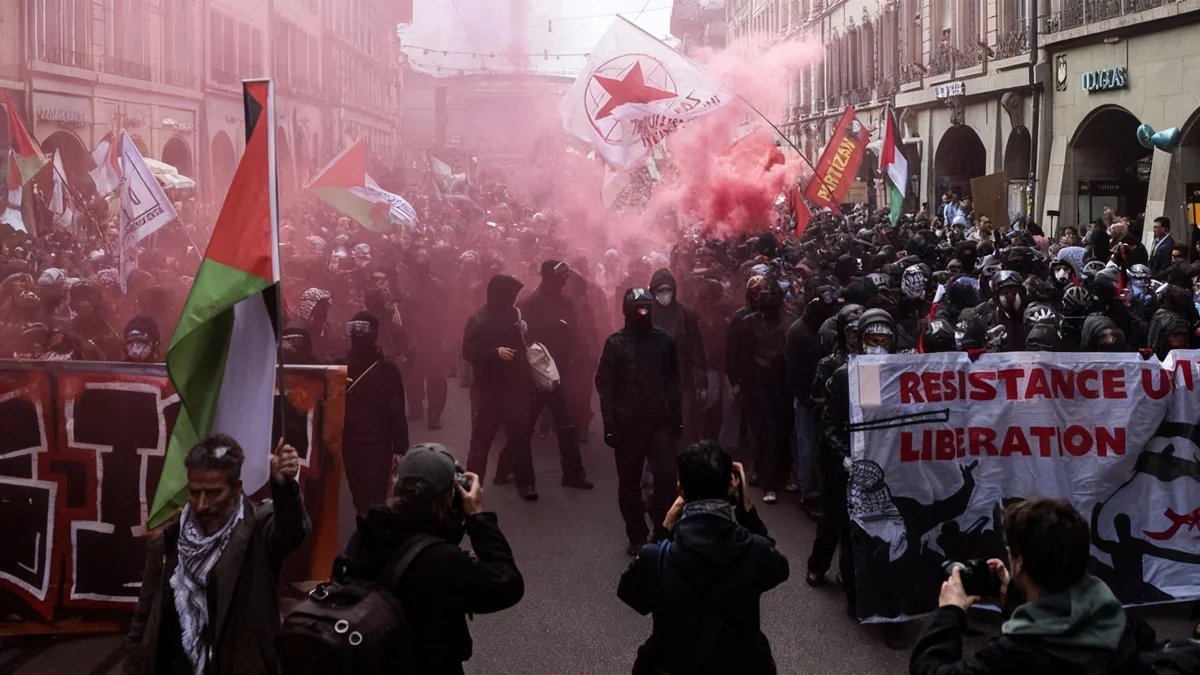




Bern authorities are grappling with the financial implications of unsanctioned demonstrations. A recent pro-Palestine protest on October 11, 2025, in Bern reportedly escalated, highlighting ongoing questions about who should bear the security costs for such events.
Key Takeaways
- Unsanctioned demonstrations can lead to significant security costs for cantons.
- Bern has stricter rules for cost recovery compared to other cantons like Valais.
- A pro-Palestine protest in Bern on October 11, 2025, raised concerns about event management.
Security Costs for Unsanctioned Demonstrations
The issue of security costs for public gatherings, especially those not officially approved, remains a point of contention across Switzerland. When demonstrations proceed without prior authorization, local authorities often incur substantial expenses for police deployment, crowd control, and public safety measures.
These costs can quickly accumulate. The question of who is responsible for these bills — the organizers, the participants, or the taxpayers — varies by canton. This creates a complex legal and financial landscape for municipalities and event organizers alike.
Fact: In the canton of Valais, organizers of an unsanctioned pro-Palestine demonstration are expected to pay 80,000 Swiss francs in security costs.
Bern's Stricter Regulations
Bern canton operates under a more stringent framework regarding the recovery of security costs from protest organizers. This contrasts with practices in other cantons, where the burden might be more easily shifted to those who initiate unsanctioned events.
The specific regulations in Bern aim to balance the right to assembly with the need for public order and financial responsibility. However, these rules often lead to complex legal challenges when authorities attempt to recover funds.
The October 11, 2025, Protest
On October 11, 2025, an unsanctioned pro-Palestine demonstration took place in Bern. Reports indicate that this event went beyond its planned scope, leading to increased security needs. Such situations often involve significant police resources to ensure the safety of both participants and the wider public.
The incident has reignited discussions among local officials about the enforcement of demonstration rules and the financial consequences for the canton. Managing large gatherings, especially those that are spontaneous or unapproved, presents a unique set of challenges for urban centers.
"Ensuring public safety during demonstrations is paramount, but the financial strain on our canton from unsanctioned events is a growing concern," stated a local official, who requested anonymity due to ongoing discussions.
Impact on Public Resources
When police and other emergency services are diverted to manage unsanctioned demonstrations, it can strain public resources. This may impact response times for other emergencies or necessitate additional funding to cover overtime and specialized equipment.
The debate extends beyond mere financial figures. It touches upon fundamental rights, public order, and the responsibilities of both citizens and the state. Finding a balance that respects freedom of expression while maintaining public safety and fiscal prudence is a continuous challenge for Bern.
Background on Swiss Protest Laws
Swiss law generally requires organizers to seek permits for public demonstrations. This allows authorities to plan for security, traffic management, and potential disruptions. Unsanctioned protests, by definition, bypass this process, making them harder to manage and often more costly.
Broader Implications for Canton Bern
The ongoing discussion about security costs is part of a larger conversation about urban management and public policy in Bern. The canton is also addressing other significant infrastructure projects, such as new train station access points. One proposed passage near Hirschengraben faces concerns from heritage preservation groups.
These parallel challenges highlight the diverse demands on public administration. From managing protests to developing infrastructure, authorities must navigate various interests and financial considerations.
- Unsanctioned Gatherings: A key challenge for urban security.
- Financial Burden: Who pays for police and public safety?
- Legal Framework: Bern's rules differ from other cantons.
- Public Debate: Balancing freedom of assembly with order.
The situation in Bern reflects a national trend where cantons are increasingly seeking ways to recover costs from event organizers. This approach aims to deter unapproved gatherings and ensure that those who initiate them share financial responsibility.
As the canton continues to evaluate its policies, the outcomes of cases like the Valais demonstration will likely inform future decisions in Bern. The goal remains to maintain effective public services without undue financial strain on taxpayers.