
Scientists at the University of Bern have developed a compact mass spectrometer crucial for NASA's upcoming Artemis missions. This instrument will analyze lunar surface materials directly, supporting the ambitious goal of long-term human presence on the Moon.
The Artemis program aims to establish sustainable human habitats and extract resources on the Moon, a significant departure from the brief Apollo landings over 50 years ago. This new approach requires on-site analysis and resource utilization, making the Swiss-developed technology vital.
Key Takeaways
- University of Bern developed a compact mass spectrometer for NASA's Artemis missions.
- The instrument will analyze lunar materials on site, supporting long-term Moon stays.
- Artemis missions focus on establishing habitats and resource extraction, unlike Apollo's short visits.
- The project highlights an international race for prime lunar locations rich in water ice and rare earths.
- Bern's involvement builds on a 50-year history with NASA, starting with the Apollo 11 mission.
Bern's Role in Lunar Exploration
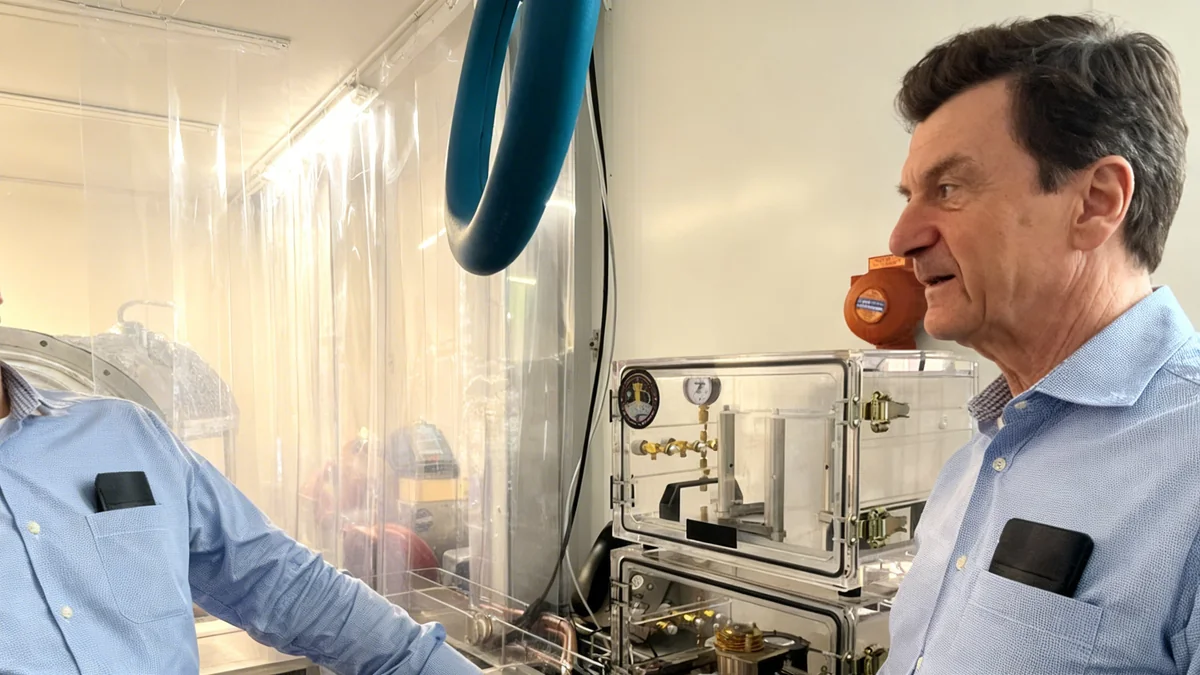
The Physikalischen Institut at the University of Bern plays a central role in the Artemis missions. Its director, Peter Wurz, leads the team behind the innovative mass spectrometer. This device, roughly the size of a beverage can, represents two decades of development.
The instrument's primary function is to determine the chemical composition of rocks and dust on the lunar surface. This on-site analysis capability is a game-changer. It means astronauts will not need to bring all samples back to Earth for detailed study, saving significant time and resources.
Instrument Fact
The mass spectrometer developed in Bern is about the size of a standard beverage can, making it highly portable for lunar exploration.
From Moon to Mars
The technology developed for the Moon has long-term implications. Scientists plan to adapt this instrument for future missions to Mars. The ultimate goal is to search for signs of life on the Red Planet by analyzing its geological makeup.
"The new step is that we want to stay longer on the Moon. The Apollo program was like a short excursion. Now, habitats are to be realized where astronauts can stay for half a year or a full year," Peter Wurz stated.
A Legacy of Space Collaboration
The University of Bern's collaboration with NASA is not new. Their involvement dates back over 50 years to the Apollo 11 mission. During that historic journey in July 1969, a solar wind sail from Bern was the only non-American experiment deployed on the Moon.
This long-standing relationship has fostered trust and expertise. The selection of Bern's mass spectrometer for Artemis is a significant honor for a country of Switzerland's size.
Historical Context
The University of Bern's first contribution to lunar missions was the Solar Wind Composition Experiment on Apollo 11, which captured solar wind particles for analysis back on Earth.
Peter Wurz explained that this recognition is the result of 20 years of consistent effort. His team regularly presented the instrument's performance data at international conferences, demonstrating its capabilities. Close collaboration with NASA involves weekly meetings and frequent travel between Switzerland and the United States.
The New Space Race and Economic Interests
Beyond scientific discovery, the Artemis missions also involve substantial economic interests. Large corporations are exploring the possibility of mining on the Moon. The focus is on rare earth elements, which are crucial for modern technologies like electric vehicles and computers.
US technology companies are reportedly investing billions of dollars. They aim to determine if lunar mining is economically viable. The prospect of extracting raw materials from the Moon and bringing them back to Earth drives this new space endeavor.
Competition for Lunar Resources
The race for lunar resources is intense. China, with its own ambitious Moon program, is a primary competitor to NASA. Both nations are striving to secure prime locations on the lunar surface. These desirable spots are often those containing water ice, essential for supporting long-term astronaut stays and producing fuel.
- Water Ice: Crucial for astronaut survival and fuel production.
- Rare Earths: Vital for electronics and electric vehicle technology.
- Strategic Locations: Areas with abundant resources are highly sought after.
The competition is not just about scientific exploration; it is about establishing a foothold for future resource utilization. Securing a landing site and claiming a specific area on the Moon could grant exclusive rights to its resources.
This marks a new era of space exploration, blending scientific advancement with strategic economic and geopolitical interests. The compact mass spectrometer from Bern is a small but critical component in this grand vision for humanity's future on the Moon and beyond.